Economic diplomacy under scrutiny as trade tensions reshape global order

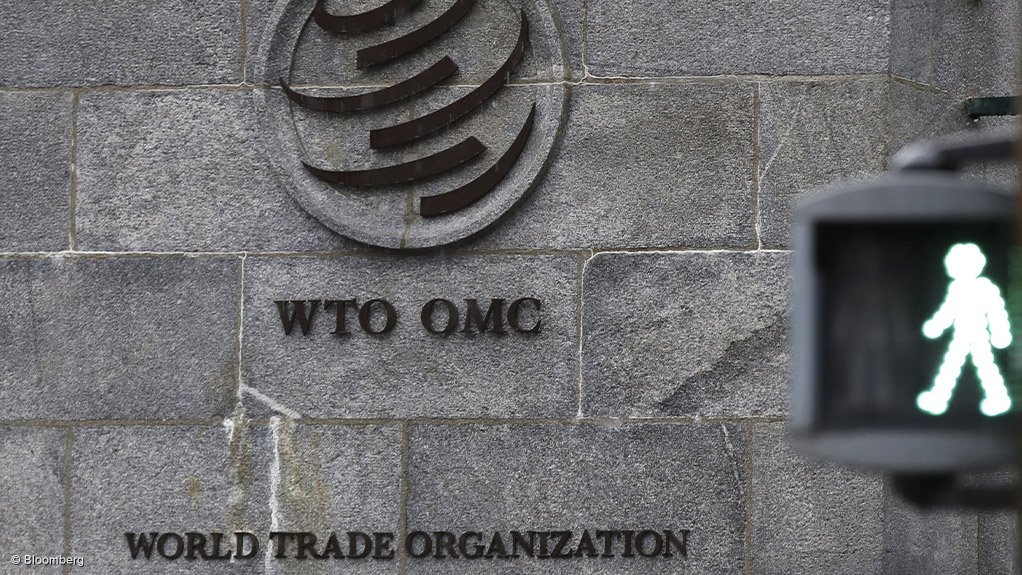


A rapidly shifting global trade landscape, marked by geopolitical tensions, weakening multilateralism and growing protectionism, is forcing countries such as South Africa to rethink their economic diplomacy strategies.
This was a central view that emerged during a webinar hosted by nonprofit economic research institution the Trade & Industrial Policy Strategies (TIPS) on May 22, titled 'Development Dialogue: Economic Diplomacy in a Changing World’, which brought together trade experts, academics and policymakers to examine the future of the global trading system and South Africa’s positioning within it.
Moderated by Department of Trade, Industry and Competition (dtic) trade branch deputy director-general Xolelwa Mlumbi-Peter, the session featured presentations by University of Cape Town School of Economics adjunct professor Dr Faizel Ismail, TIPS executive director Dr Saul Levin, UK Foreign, Commonwealth and Development Office Southern Africa trade policy head David Machin and senior academic and global economic governance expert Professor Daniel Bradlow.
Mlumbi-Peter noted that the world economy was undergoing a profound transformation driven by economic uncertainty, technological disruption and rising geopolitical contestation and warned that unilateral and protectionist measures were undermining the rules-based system that had underpinned global trade for decades, thereby creating uncertainty with disproportionate effects on developing economies.
“We are seeing a lot of changes resulting in economic uncertainty, geopolitical tensions, new technologies and the weakening of the multilateral trading system. These shifts are resulting in the reordering of the economic order from a unipolar to a bipolar world.
“But also, it's clear that we are now moving towards a multipolar world and this is resulting in the intensification of global competition, shifting global alliances and contestation, even in terms of the principles that have always underpinned the multilateral trading system,” she said.
The discussion then turned to the rise of plurilateral trade agreements – arrangements negotiated among smaller groups of countries and whether they risk marginalising developing economies.
Ismail cautioned that newer forms of plurilateralism could fragment the global trading system further and weaken multilateral principles such as consensus-based decision-making and non-discrimination and stressed that economic diplomacy was not only about national interests, but also about shared values and principles.
He argued that the current debate on the reform of global intergovernmental body the World Trade Organisation (WTO) cannot be separated from the historical asymmetries embedded within the global trading system since the establishment of the General Agreement on Tariffs and Trade (GATT).
“There were a few countries, mostly the developed countries that were very active in the GATT, mainly because most of the developing countries, especially African countries, were still to emerge from colonisation,” he said.
Ismail also noted that the collapse of the WTO Doha Development Round marked a turning point, after developed countries shifted away from broad multilateral negotiations towards issue-specific approaches more aligned with their strategic interests.
Levin focused on the practical implications of changing trade patterns for South Africa, presenting data showing how the country’s export profile and trade relationships have evolved in recent years.
He noted that China remained South Africa’s largest trading partner, while Germany has overtaken the US as the country’s second-largest export destination.
Levin also highlighted that South Africa’s exports remain heavily concentrated in minerals and commodities, although there has been some diversification into sectors such as automotive manufacturing and agriculture.
However, he also pointed to the crisis multilateralism finds itself in owing to deepening geopolitical shifts.
“We've seen the military conflicts that are creating chaos, but also the technological change and the very big demand for critical minerals, which is impacting on how we need to think about exports and investment. So where do we fit in and what does it mean for us to think about changing our approach?,” Levin noted.
However, Machin maintained that multilateralism remained the preferred model but said consensus-based negotiations had become increasingly difficult in a more fragmented global environment.
“There is a growing imperative from our business communities to deliver practical outcomes that actually work for them in reality, to enable them to trade internationally and ultimately drive growth and job creation in our countries.
“From the UK's perspective, I want to be clear that [the] WTO is vital. It provides essential stability and predictability, reducing trade costs significantly. It remains critical as the only global body regulating rules of trade, comprehensively,” Machin said.
Bradlow placed the current trade tensions within a broader historical and geopolitical context, arguing that the WTO was created during a period of post-Cold War optimism when the US and Europe dominated the global economy.
At present, he noted that climate change, technology, labour and human rights issues had fundamentally changed the nature of trade governance, increasingly drawing domestic policy issues into international negotiations, and argued that regional integration would become increasingly important for Africa’s negotiating power and economic development.
“There is a need for more regional integration, not only in terms of promoting trade within the continent, but also to form African positions on particular issues so that in the negotiations, Africa can negotiate from a better bargaining position than it might have if African countries attempt to negotiate individually,” Bradlow concluded.
Article Enquiry
Email Article
Save Article
Feedback
To advertise email advertising@creamermedia.co.za or click here
Research Reports

Projects
Latest News
Showroom

EIMS is an independent specialised environmental consulting firm offering the full spectrum of environmental management services across all sectors...
VISIT SHOWROOM
ZF Aftermarket is the after-sales division of the world-renowned German ZF group, a global leader in mobility technology.
VISIT SHOWROOM
Announcements
What's On
Subscribe to improve your user experience...
Option 1 (equivalent of R125 a month):
Receive a weekly copy of Creamer Media's Engineering News & Mining Weekly magazine
(print copy for those in South Africa and e-magazine for those outside of South Africa)
Receive daily email newsletters
Access to full search results
Access archive of magazine back copies
Access to Projects in Progress
Access to ONE Research Report of your choice in PDF format
Option 2 (equivalent of R375 a month):
All benefits from Option 1
PLUS
Access to Creamer Media's Research Channel Africa for ALL Research Reports, in PDF format, on various industrial and mining sectors
including Electricity; Water; Energy Transition; Hydrogen; Roads, Rail and Ports; Coal; Gold; Platinum; Battery Metals; etc.
Already a subscriber?
Forgotten your password?
Receive weekly copy of Creamer Media's Engineering News & Mining Weekly magazine (print copy for those in South Africa and e-magazine for those outside of South Africa)
➕
Recieve daily email newsletters
➕
Access to full search results
➕
Access archive of magazine back copies
➕
Access to Projects in Progress
➕
Access to ONE Research Report of your choice in PDF format
RESEARCH CHANNEL AFRICA
R4500 (equivalent of R375 a month)
SUBSCRIBEAll benefits from Option 1
➕
Access to Creamer Media's Research Channel Africa for ALL Research Reports on various industrial and mining sectors, in PDF format, including on:
Electricity
➕
Water
➕
Energy Transition
➕
Hydrogen
➕
Roads, Rail and Ports
➕
Coal
➕
Gold
➕
Platinum
➕
Battery Metals
➕
etc.
Receive all benefits from Option 1 or Option 2 delivered to numerous people at your company
➕
Multiple User names and Passwords for simultaneous log-ins
➕
Intranet integration access to all in your organisation